Trauma Recovery
on trauma and recovery
“We don’t see things as they are; we see them as we are.” — Anaïs Nin
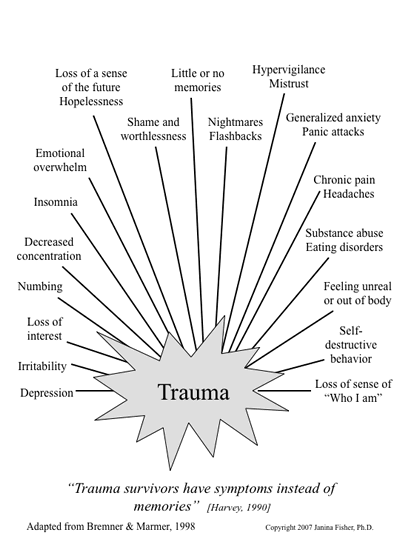
Often, when there have been painful or overwhelming experiences, you are not just working through what happened. You are living inside the aftermath. Life may bring you back to familiar places, relationships, or roles that carry history, grief, and memory, even as you are no longer the person who once had to survive them. Trauma recovery is less about revisiting the past for its own sake and more about understanding how your history shows up in the present. Old patterns and internalized messages may surface, not because you are moving backward, but because you are now close enough to yourself to notice them. What you have been carrying is not only loss. It is the work of becoming someone new while your nervous system still remembers who you once had to be. Many people come to therapy during times of transition, identity shift, or rebuilding after experiences that shaped them deeply. You may feel like you are returning as a different person, while parts of you still respond from an earlier time. This does not mean something is wrong. It means your system is trying to integrate what you have lived through. What happened to you was not your fault. And the life you are building now asks something different of you, not more endurance or strength, but greater honesty, care, and permission to be held. Healing, in this season, is the life’s work of integration. It allows the past to be acknowledged without letting it define who you are becoming.
In therapy, we gently notice how your experiences show up now. This includes how you relate to others, respond to stress, talk to yourself, or cope when things feel overwhelming. Together, we approach these patterns with curiosity and compassion, creating space for choices that help you feel more grounded, connected, and at ease in your life.